Annapurna Base Camp Trek – 7 Days Itinerary and Cost

Annapurna Base Camp Trek – 7 Days Itinerary and Cost

The 7-day Annapurna Base Camp trek begins at Jhinu Danda. This moderately difficult trek involves daily hikes lasting between 4 to 8 hours.

Duration 7 days
Max Altitude 4130 meters
Difficulty Moderate
Per Day Walk 06-07 hrs
Accomodation Tea House
Best Season Mar, April, Oct, Nov

The Annapurna Base Camp trek is a moderate to challenging, high-altitude trek covering about 68 to 110km, depending on the start point and routes. During this short trip, you’ll enjoy breathtaking views of mountain peaks taller than 8,000 meters. The Annapurna trails are renowned for their stunning mountains, scenic beauty, vibrant villages, and diverse highlights. Many young trekkers opt for the ABC trek from Pokhara as a shorter, more affordable alternative to the Everest Base Camp trek. The Annapurna Base Camp trek cost varies based on your group size and chosen itinerary, but it's affordable enough for even beginners compared to other treks. Highlights:
  • Begin the ABC Trek route from Pokhara, boasting breathtaking scenic beauty, ensuring a perfect start.
  • Discover the world’s best mountains, including the majestic peaks of Annapurna I, Machapuchare (Fishtail), and Hiunchuli.
  • Spend the night in the shadow of the majestic Annapurna Mountain range.
  • Trek through vibrant rhododendrons, offering a flowery outlook that enchants every traveller.
  • Experience the culture and traditions of local Gurung and Magar inhabitants.
  • Enjoy affordable pricing starting from US$650.
  • Opt for a helicopter tour to ABC as a compelling alternative to avoid 7-8 days of travel.

Overview of ABC Trek

Trek to ABC includes the opportunity for travellers to enjoy the varied landscape of the Annapurna Sanctuary, which includes passing through lush forests and scenic areas. It offers an exceptional blend of natural beauty, cultural diversity and thrilling trekking with mountain views. Located in the Annapurna Region, the trek brings you close to the different 8000-meter-high mountains. One of the trek’s major highlights is the visually stunning areas surrounded by swiftly flowing rivers and magnificent waterfalls. However, choosing the right month for the trek is crucial. The rhododendron forests bloom from February to April, creating a vibrant landscape, while November to December offers clear mountain views. Selecting the right month can significantly enhance your experience. Physical preparation is also essential. Although the ABC trek is not as physically demanding as some other top trekking destinations, additional training and workouts can help prevent physical breakdowns during the journey.

How to Prepare for the Annapurna Base Camp (ABC) Trek?

Trekking in the Himalayas is not just walking; you must prepare physically and mentally. Here’s how to get ready for the ABC trek:

Physical Preparation

  • Exercise intensely for at least 4-5 days a week starting from three months before the trek.
  • Focus on cardio, strength training, and exercises.

Mental preparation

  • Get ready mentally for the challenges of high-altitude trekking.
  • Stay positive and motivated throughout your preparation and trek.
  • Practice some yoga or mental exercise to prepare for any obstacles.

Gear up

  • Get the right gear, including hiking boots, clothing, and accessories.
  • Make sure your gear suits the varying weather conditions in the Himalayas.

Choose the correct itinerary

  • Pick an itinerary that includes enough acclimatization days. This will help your body adjust to the altitude and reduce the risk of altitude sickness.

Dietary Preparation

  • Eat more carbs to keep your energy up. Rice is a staple in Nepal, so try to have dal bhat (rice and lentils) for lunch. There’s a saying: “Dal Bhat Power, 24 hours.”
  • Try to incorporate protein into every meal. However, avoid meat when you are in the Himalayas since you might not get fresh meat up there. 
  • Stay properly hydrated to help reduce the risk of altitude sickness.
The Annapurna Base Camp trek is not technical, but being physically fit is essential. With the proper preparation, the trek can be manageable for both beginners and experienced trekkers. We have a 100% success rate for reaching the Annapurna Base Camp, so you can confidently fulfil your dream of being there.

Annapurna Base Camp (ABC) Trek Route

Explore the diverse routes to the base camp, ranging from scenic treks via Poonhill to direct paths through Jhinu Dada to ABC, each offering unique landscapes and cultural experiences. Whether you’re looking for a quick adventure or a longer journey, this trek promises breathtaking views and unforgettable memories.

Start of ABC Trek

The route to ABC can start from different trailheads and even can be combine with another trek in the Annapurna region.Trek to the base camp starts from Pokhara which is around 8-9 hrs drive from Pokhara. You can also travel via flight to save up the time. We have covered the detailed itinerary of ABC trek from Pokhara to Pokhara, one of the tourist and naturally blessed towns for relaxation before and after the trek.
  1. Start from Ulleri (ABC trek via Poonhill) for 10 days: This route includes the popular Poonhill trek, renowned for its breathtaking sunrise views over the Annapurna and Dhaulagiri mountain ranges. The trek begins with a drive to Nayapul, followed by a hike to Ulleri. This extended route offers a blend of diverse landscapes, cultural experiences, and acclimatization benefits.
  2. Start from Jhinu Dada (Shortest route) for 5 days: : For travellers short on time, starting from Jhinu Danda offers the shortest and most direct route to Annapurna Base Camp (ABC). The trek begins with a scenic drive from Pokhara to Jhinu Danda, followed by trekking through charming villages and lush rhododendron forests. This route is ideal for trekkers aiming for a quicker journey to the base camp. The popular 7-day ABC itinerary can also be customized into a shorter 5-day version.
  3. Start from Kade (Mardi Himal with ABC trek) for 10 days: Combining the Mardi Himal trek with the ABC trek offers an adventurous and scenic journey. The trek starts from Kade, passing through dense forests, alpine meadows, and high ridges with panoramic views. This route allows trekkers to experience the less crowded Mardi Himal Base Camp before continuing to ABC.

End of ABC Trek

On the way back from Annapurna Base Camp, we follow the same route until Choomrong. From Choomrong, we can either walk to Ghandruk, a beautiful Gurung village or head straight down to Jhinu Dada, the hot spring. You can take a jeep from either place to Pokhara, which takes about 3-4 hours.

What can I expect during the Annapurna base camp trekking?

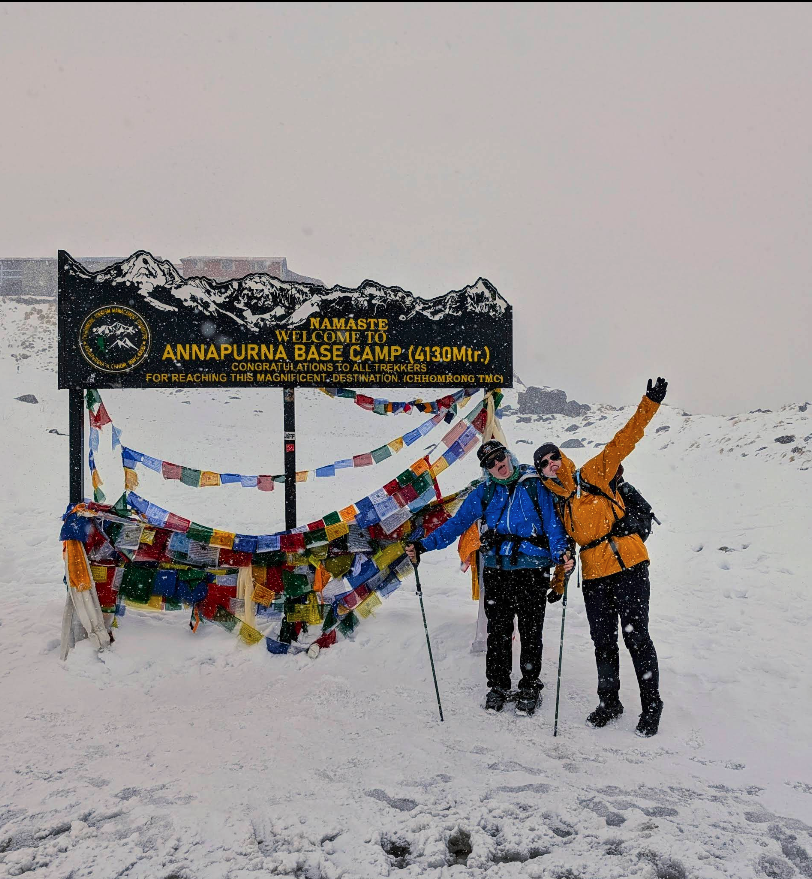
The 360-degree view of the mountains from Annapurna Base Camp (ABC), including sunrise and sunset, is breathtaking and completely worth the effort. From the base camp, you can see these peaks: Annapurna I (8091m), Fishtail, Hiuchuli, Annapurna South, Annapurna Fang, Annapurna III, Tharpu Chuli, Gangapurna, and Gandharba Chuli. The scenery changes daily, becoming more dramatic and breathtaking as you ascend higher towards Annapurna Base Camp. The trek passes through diverse landscapes, rhododendron forests, towering snow peaks, and traditional villages. You will cover thousands of steps and stairs, which are uneven in shape. Every day on the Annapurna Base Camp trek, you will cover distances ranging from 6 to 15 kilometres. You should train to walk 15 kilometres daily over several days to prepare. The local people maintain the trekking trails, making it easy to explore the region. The trekking routes are very safe, with minimal chances of getting lost. If you’re seeking a challenging and rewarding experience, then the Annapurna Base Camp trek is for you.

Weather and Season at Annapurna Base Camp 

Autumn (September to November)

During autumn, the skies are clear, offering the best views of the mountains, including the sunrise and sunset. The beginning of autumn is quite warm, but temperatures drop rapidly by the end of November. Average maximum and minimum temperatures in Autumn at Annapurna Base Camp:
  • September: 20°C to 0°C
  • October: 16°C to -6°C
  • November: 11°C to -10°C

Winter ( December to February)

Trekking can be quite challenging during the winter season. Temperatures may drop to -20°C or lower, heavy snowfall can cause trail whiteouts, teahouses might close, and there is an increased risk of avalanches after significant snowfall. Average maximum and minimum temperatures in Winter at Annapurna Base Camp:
  • December: 8 °C to -15 °C
  • January: 7 °C to -20 °C
  • February: 6 °C to -20 °C

Spring (March to May)

March and April are considered the most beautiful months of the year as flowers, especially rhododendrons, begin to bloom. The weather is usually clear in the early morning and evening. Still, it can be hazy during the day, which might obscure the views. Also, just be prepared that the pre-monsoon season brings some rain, starting mid-May. Average maximum and minimum temperatures in Spring at Annapurna Base Camp:
  • March: 4°C to -8°C
  • April: 8°C to -4 °C
  • May: 14 °C to 0 °C

Summer  (June to August)

Summer is also the rainy season in Nepal. During these months, expect rain in the mornings and evenings. The trails will be muddy and slippery, and leeches are common. The weather is often foggy, so views of the Himalayas are not guaranteed. Average maximum and minimum temperatures in Summer at Annapurna Base Camp:
  • June: 16 °C to 5 °C
  • July: 18 °C to 7°C
  • August: 18 °C to 7 °C

Daily Trekking Schedule Example:

First Day

On your first day of trekking, our guide will pick you up from your hotel in Pokhara and transfer you to the trailhead depending upon your itinerary. He will introduce you to the other group members and porters. After a brief introduction, you will start walking to the first day’s camp.

Typical Daily Schedule

  • 7:00 AM: Breakfast at the teahouse.
  • 7:30 AM: Briefing on the day’s trek, including walking hours, trail terrain, altitude gain, and a gear check, followed by the start of the trek.
  • 8:00 AM – 3:00 PM: Trekking typically lasts 5-7 hours, with lunch served between 12:00 and 1:00 PM along the trail.
  • 6:00 PM: Debriefing.
  • 7:00 PM: Dinner at the teahouse.

Documents Required

Government issued identification:

Carry a valid proof of identification issued by the government for identification. It could be your passport, driving license, or citizenship certificate.

Trekking Permits:

ACAP Permit:

To enter Annapurna Conservation Area, you need a permit from the Annapurna Conservation Area Project office.

TIMS Permit:

Alongside the ACAP permit, you need a TIMS permit as well. To get a TIMS permit, you must submit a copy of your passport and digital photographs. Note, TIMS card is non-transferable and non-endorsable.

You can obtain a TIMS card from the authorized trekking agency.

Mountain Routes arranges the customers required permits (ACAP and TIMS).

Travel Insurance:

We advise you to cover your holiday with travel insurance. In addition, it would be best to consider taking out comprehensive travel insurance covering medical expenses, cancellation, baggage loss/theft, and emergency repatriation. The risks of trekking at a high altitude are significant. Therefore, it is essential to note that most standard travel insurance packages do not include high-altitude trekking.

It would be best if you had travel insurance when you are trying to tackle such a feat, and the travel insurance has to cover activities such as hiking in a country like Nepal.

Over the decade, we have witnessed trekkers airlifted due to altitude sickness or injury. Unfortunately, the cost of a helicopter rescue can be overwhelming on your budget. So unless you can afford that, be sure to get suitable cover.

Includes/ Excludes

Included

  • Local Guide.
  • Hotel in Pokhara.
  • All trek permits (Annapurna National Park Permit and TIMS)
  • Overland transfer to and from trekking start and end point.
  • Lodge accommodation during trekking.
  • All Meals (Breakfast, Lunch, Dinner) during trek.
  • Only Breakfast in Pokhara.
  • One porter for 2 trekkers.
  • Basic First aid kit.
  • Farewell Dinner.

Excluded

  • Hotel in Kathmandu
  • Visas and travel insurance
  • Lunch and Dinner in Pokhara
  • Bottled drinks and beverages
  • Evacuation (will be done in your account
  • Tips for Guide and Porters
  • Single supplement Charges
  • Laundry, Phone services, Personal Expenses
  • Add-Onn trips
  • Tea breaks, chocolates or other snacks
  • Delay and cancellation because of natural phenomenon

Request a private departure for this trip.

Request a Private Departure

Plan your trek on your own schedule. Private departures offer flexibility with dates, itinerary customization, and exclusive attention from our guides.

Choose your own start date
Exclusive guide and porters
Perfect for families and groups
Tailored Itinerary
Personalized Pace

Success!

10 things to carry on Annapurna Base Camp Trek

1. Water Bottle:

There are water streams on the way, but the seemingly clean water doesn’t get carried out. Drinking untreated water can spoil you trekking to the amazing scenery of Mt Annapurna. Carry enough water for the entire duration of your trek. Even though you buy water bottles at tea houses upto Poonhill, we recommend carrying your own medicated water.

2. Camera and Batteries:

A good camera is essential as it helps you capture those special moments you cherish for your lifetime. But running low on power would be the most disappointing of a lifetime. Hence, it is always handy to have extra batteries for your camera.

3. Sunscreen and Sunglasses:

Wear sunscreen lotion to protect yourself from sunburn. Sunglasses are to prevent snow blindness. Especially during April, walking on long stretches of snow exposes you to direct sunlight. Such long exposures for long-duration might lead to snow blindness.

4. Power bank:

It is wise to carry a power bank to charge your devices. It is because you get to charge your devices and electronic items in tea houses most of the time. However, with the surge in the trekkers, you might not charge as required. Also, if the power socket is different than the one you need for your device, the power bank is your last resort.

5. Trekking poles:

Trekking Poles are handy when walking downhill. These Poles help you stabilize yourself and prevent falls. You may also use them as walking sticks. Trekking poles take the stress off your joints and helps to balance your body weight. It frees your arms for some exercise to help keep your hands from swelling while you’re gaining elevation.

6. First aid kit:

A small first aid kit may be helpful for minor injuries. Include bandages, gauze (or cotton balls), medical tape, and a compression bandage if you’re going trekking.

7. Money belt:

We advise you to carry money in a money belt. Unfortunately, the ATM facility is not available in the Annapurna sanctuary trek. Hence, we advise you to carry cash.

8. Gaiters:

Wear gaiters to protect your legs against thorny bushes or other sharp objects. You can get comfortable gaiters from the shops at Thamel.

9. Medication:

You must take all of your prescription and over-the-counter medicines on the trip. Similarly, bring along any other medication you need. If you don’t bring them with you, there will be no way to get them needed during the trek. Likewise, we suggest carrying medications for upset stomachs or diarrhea. You may also want to carry some painkillers if you get a headache or backache.

10. Toilet paper and Hand sanitizer:

Since Nepalese people don’t use toilet paper, there won’t be any available trekkers. However, if you want to use some toilet tissue during your trip, there are plenty of places where you can get it. Also, if there isn’t any soap available at the communal sink, then it’s a good idea to bring some hand sanitizer just for cleaning up afterward. As we ascend higher, the comfort of an indoor toilet is non-existent.

7 Days Itinerary of Annapurna Base Camp Trek

Day 1: Drive from Pokhara to Jhinu Danda (1,780 m / 5,839 ft) and trek to Chhomrong (2,170 m / 7,120 ft)

Day 2: Trek from Chhomrong to Dovan (2,600 m / 8,530 ft)

Day 3: Trek from Dovan to Deurali (3,200 m / 10,498 ft)

Day 4: Trek from Deurali to Annapurna Base Camp (4,130 m / 13,549 ft)

Day 5: Trek from ABC to Bamboo (2,310 m / 7,578 ft)

Day 6: Trek from Bamboo to Jhinu Danda (1,780 m / 5,839 ft)

Day 7: Drive back from Jhinu Danda to Pokhara (822 m / 2,697 ft)

Annapurna Base Camp trek Itinerary (Detailed)

The ABC trekking begins on day 1 with a scenic 3-hour drive from Pokhara to Jhinu Danda, passing lush hills and rural landscapes. After arriving at Jhinu Danda, the trek continues uphill towards Chhomrong, taking around 2-3 hours. Chhomrong is a charming Gurung village with stunning views of Annapurna South and Machhapuchhre (Fishtail). Overnight stay will be at a cozy teahouse.

Duration: 3-hour drive and 2-3 hours trek

The day 2 of ABC trek begins with a descent on stone stairs to the Chhomrong River, followed by an uphill climb through lush forests to Sinuwa. From Sinuwa, the trail continues gently through bamboo and rhododendron forests to Bamboo. Beyond Bamboo, the route steadily climbs until reaching Dovan, the overnight stop.

Duration: Trip Duration: 5-6 hours

Continuing onward, the trail winds through dense forests with the soothing sounds of the Modi Khola River in the background. Gradually ascending, trekkers enjoy spectacular glimpses of towering Himalayan peaks. A brief stop at Himalaya village for refreshments is followed by a steady climb to Deurali, where the night will be spent surrounded by mountains.

Duration: Trip Duration: 4-5 hours

Trip Duration: 4-5 hours Continuing onward, the trail winds through dense forests with the soothing sounds of the Modi Khola River in the background. Gradually ascending, trekkers enjoy spectacular glimpses of towering Himalayan peaks. A brief stop at Himalaya village for refreshments is followed by a steady climb to Deurali, where the night will be spent surrounded by mountains.

Duration: Trip Duration: 5-6 hours
After experiencing a breathtaking sunrise at day 5 of ABC trek, trekkers descend along the same route back to Bamboo. Though the route is downhill, careful footing is essential. Passing through MBC, Deurali, and Dovan, there are opportunities for photography amid diverse landscapes. Overnight accommodation is in Bamboo, surrounded by peaceful forest views.
Duration: Trip Duration: 6-7 hours

The trek retraces the ABC route through rhododendron and bamboo forests to Chhomrong. From Chhomrong, a sharp descent leads to Jhinu Danda. Upon arrival, trekkers can enjoy the soothing natural hot springs nearby—ideal for relaxing tired muscles. The last night on the trek is spent at a lodge in Jhinu Danda.

Duration: Trip Duration: 5-6 hours

The adventure concludes with a leisurely breakfast followed by a short walk to the pickup point. A scenic 3-hour drive brings everyone back to Pokhara, where there's time to relax and celebrate completing the Annapurna Base Camp trek. The remainder of the day can be spent exploring Pokhara’s lakeside cafes, shops, and lively atmosphere.

Duration: Trip Duration: 30 min walk and 03 hours drive

Things to Note Before Booking the Trek

  • Transport: The ABC trek starts in Pokhara. The drive from Kathmandu to Pokhara takes about 7-9 hours. Alternatively, you can fly for approximately USD 95, which takes 20 to 30 minutes. This trip includes transport by tourist bus, but if you prefer a private jeep, please inquire about the extra cost.
  • Trek Difficulty: This trek ranges from moderate to challenging and is suitable for those in good physical condition. Both children and seniors have completed the Annapurna Base Camp Trek.
  • Trek Duration: The trek to Annapurna Base Camp can vary depending on the trail’s starting point. It usually lasts 5 to 10 days, depending on how much time you need to adjust to the altitude.
  • Porter Services: Porters can carry up to 20kg, but we provide one porter for every two trekkers. Each trekker’s backpack must be at most 9 kg.
  • Food During the Trek: Meals (breakfast, lunch, and dinner) are included in the trek but not in Pokhara.
  • Water Budget: Allocate at least 2-3 USD daily for hot or sealed bottled water during the initial days until Tadapani.
  • Electricity in Tea Houses: Charging devices in tea houses cost 1.5 USD to 2 USD, and prices increase the further you trek.
  • WiFi and Telephone: WiFi is available at tea houses for 1.5 USD to 2 USD, though the quality may be poor. Phone calls can also be made from most tea houses.
  • Drone Policy: Drones are only permitted with prior approval, which can be difficult to obtain unless you are a professional with time to manage the paperwork.
  • Insurance: Insurance is mandatory for this trek, and please make sure your insurance covers trekking up to 6,000 meters, even though this trek doesn’t reach extremely high altitudes.
  • Tips: Guides and porters expect tips of about 100 USD at the end of the trek.
  • Health Precautions: Carry essential medications and a first-aid kit. Please inform us if you have any medical conditions or had surgery on your knee or ankle.
  • Cancellation After Rescheduling: Rescheduling fees are non-refundable if the trek is later cancelled.

Annapurna Base Camp Trek: FAQ

We suggest you carry only the essentials. You can leave your extra belongings at your hotel in Pokhara, Kathmandu, or our office.
It’s always better to start planning the trek as early as possible. The earlier you begin, the more time you have to prepare yourself physically and mentally. If you are new to the Himalayas, we recommend starting your preparation six months before your trip. It gives you enough time to get used to the altitude and weather conditions.
It is considered a moderate to challenging trek, so no previous experience of heigh altitude trekking is required. However, most of the trek involves a long duration trail that goes up and at times steep ascents too. If you have a problem with the ankle, then be cautious. However, if you still want to reach the base camp you can take a Annapurna Base Camp heli tour. Also, weather plays a vital role when you are trekking. It can snow on the trails if you go in mid-winter. Instead of crampons, carry micro spikes and carry lightweight to give you the confidence to trek.
We provide you with basic accommodation during the trek. We accommodate you in a sharing room with a mattress and a blanket/quilt. In addition, we can offer you sleeping bags if needed. Most teahouses or guest houses provide accommodation with a western flushing toilet. However, you can expect squat toilets outside the room in the higher elevation.
The tea houses or the guest houses are the places to eat. You can order from the menu provided by the business. Typical Menu in Mountain Lodges: Breakfast: Eggs, oatmeal, porridge, toast, pancakes, tea & coffee Lunch: Dal Bhat (lentil soup, rice, and curry), egg fried rice, potatoes, beans, fries, pizza, pasta Dinner: Pasta, vegetable rice, soups, Dal Bhat (traditional Nepalese food)
You can buy bottled water until Tadapani if you start your trek via Poonhill. However, after Tadapani, bottled water is not available. You can refill boiled water available at tea houses for an extra charge or refill from the tap and use water purification tablets.
We allocate one porter for every two trekkers. Please keep in mind that porters will carry a maximum of 15kg to 20kg of luggage in total. There will be one guide for the entire trek.
Annapurna Base Camp trek takes you to 4130m / 13550 ft high, so there are chances of high altitude sickness depending on every individual. For example, if you feel shortness of breath, dizziness could be the symptom of High Altitude sickness. Therefore, we recommend you not push yourself but rest and adjust to the altitude in such cases.
Though Annapurna Base Camp Trek doesn’t require any special skills or experience, people who want to enjoy nature at its best must be physically active and keep themselves healthy. As a result, you may need to walk longer distances than usual during the hike.
The weather in the Annapurna Base Camp is quite windy and snowy. You can find somehow different weather types in as per the season. Autumn (September to November) peak season for the trek.
  • September: 20°C to 0°C
  • October: 16°C to -6°C
  • November: 11°C to -10°C
Winter (December to February).
  • December: 8 °C to -15 °C
  • January: 7 °C to -20 °C
  • February: 6 °C to -20 °C
Spring (March to May) peak season for the trek.
  • March: 4°C to -8°C
  • April: 8°C to -4 °C
  • May: 14 °C to 0 °C
Summer / Monsoon (June to August).
  • June: 16 °C to 5 °C
  • July: 18 °C to 7°C
  • August: 18 °C to 7 °C
The average number of steps from Jhinu to Annapurna Base Camp is about 62,600 steps, which is the shortest route to reach the Annapurna Base Camp.
  • Jhinu to Upper Sinuwa: 24,000 steps
  • Upper Sinuwa to Deurali: 22,500 steps
  • Deurali to Annapurna Base Camp (ABC): 16,100 steps

Map

Elevation Profile

Pokhara 845m
Ulleri 2,075m
Poonhill 3,017m
Tadapani 2,703m
Dovan 2,508m
MBC 3,709m
Annapurna Base Camp 4,100m
Bamboo 2,312m
Jhunu Dada 1,728m
Pokhara 845m
Location 11 0m
Location 12 0m
Location 13 0m
Location 14 0m

10 things to carry on Annapurna Base Camp Trek

1. Water Bottle:

There are water streams on the way, but the seemingly clean water doesn’t get carried out. Drinking untreated water can spoil you trekking to the amazing scenery of Mt Annapurna. Carry enough water for the entire duration of your trek. Even though you buy water bottles at tea houses upto Poonhill, we recommend carrying your own medicated water.

2. Camera and Batteries:

A good camera is essential as it helps you capture those special moments you cherish for your lifetime. But running low on power would be the most disappointing of a lifetime. Hence, it is always handy to have extra batteries for your camera.

3. Sunscreen and Sunglasses:

Wear sunscreen lotion to protect yourself from sunburn. Sunglasses are to prevent snow blindness. Especially during April, walking on long stretches of snow exposes you to direct sunlight. Such long exposures for long-duration might lead to snow blindness.

4. Power bank:

It is wise to carry a power bank to charge your devices. It is because you get to charge your devices and electronic items in tea houses most of the time. However, with the surge in the trekkers, you might not charge as required. Also, if the power socket is different than the one you need for your device, the power bank is your last resort.

5. Trekking poles:

Trekking Poles are handy when walking downhill. These Poles help you stabilize yourself and prevent falls. You may also use them as walking sticks. Trekking poles take the stress off your joints and helps to balance your body weight. It frees your arms for some exercise to help keep your hands from swelling while you’re gaining elevation.

6. First aid kit:

A small first aid kit may be helpful for minor injuries. Include bandages, gauze (or cotton balls), medical tape, and a compression bandage if you’re going trekking.

7. Money belt:

We advise you to carry money in a money belt. Unfortunately, the ATM facility is not available in the Annapurna sanctuary trek. Hence, we advise you to carry cash.

8. Gaiters:

Wear gaiters to protect your legs against thorny bushes or other sharp objects. You can get comfortable gaiters from the shops at Thamel.

9. Medication:

You must take all of your prescription and over-the-counter medicines on the trip. Similarly, bring along any other medication you need. If you don’t bring them with you, there will be no way to get them needed during the trek. Likewise, we suggest carrying medications for upset stomachs or diarrhea. You may also want to carry some painkillers if you get a headache or backache.

10. Toilet paper and Hand sanitizer:

Since Nepalese people don’t use toilet paper, there won’t be any available trekkers. However, if you want to use some toilet tissue during your trip, there are plenty of places where you can get it. Also, if there isn’t any soap available at the communal sink, then it’s a good idea to bring some hand sanitizer just for cleaning up afterward. As we ascend higher, the comfort of an indoor toilet is non-existent.

Things to Note Before Booking the Trek

  • Transport: The ABC trek starts in Pokhara. The drive from Kathmandu to Pokhara takes about 7-9 hours. Alternatively, you can fly for approximately USD 95, which takes 20 to 30 minutes. This trip includes transport by tourist bus, but if you prefer a private jeep, please inquire about the extra cost.
  • Trek Difficulty: This trek ranges from moderate to challenging and is suitable for those in good physical condition. Both children and seniors have completed the Annapurna Base Camp Trek.
  • Trek Duration: The trek to Annapurna Base Camp can vary depending on the trail’s starting point. It usually lasts 5 to 10 days, depending on how much time you need to adjust to the altitude.
  • Porter Services: Porters can carry up to 20kg, but we provide one porter for every two trekkers. Each trekker’s backpack must be at most 9 kg.
  • Food During the Trek: Meals (breakfast, lunch, and dinner) are included in the trek but not in Pokhara.
  • Water Budget: Allocate at least 2-3 USD daily for hot or sealed bottled water during the initial days until Tadapani.
  • Electricity in Tea Houses: Charging devices in tea houses cost 1.5 USD to 2 USD, and prices increase the further you trek.
  • WiFi and Telephone: WiFi is available at tea houses for 1.5 USD to 2 USD, though the quality may be poor. Phone calls can also be made from most tea houses.
  • Drone Policy: Drones are only permitted with prior approval, which can be difficult to obtain unless you are a professional with time to manage the paperwork.
  • Insurance: Insurance is mandatory for this trek, and please make sure your insurance covers trekking up to 6,000 meters, even though this trek doesn’t reach extremely high altitudes.
  • Tips: Guides and porters expect tips of about 100 USD at the end of the trek.
  • Health Precautions: Carry essential medications and a first-aid kit. Please inform us if you have any medical conditions or had surgery on your knee or ankle.
  • Cancellation After Rescheduling: Rescheduling fees are non-refundable if the trek is later cancelled.

Mardi Himal, a hidden gem nestled in the Annapurna region of Nepal, is rapidly gaining recognition among adventure enthusiasts. Located east of the famous Annapurna Base Camp trek, Mardi Himal stands at an elevation of 5,587 meters (18,330 feet). The trek to Mardi Himal offers an off-the-beaten-path experience, with breathtaking views of the Annapurna Range, Machhapuchhre (Fishtail), and other Himalayan giants. The Mardi Himal Trek Itinerary typically involves a journey through lush rhododendron forests, quaint villages, and pristine landscapes, making it a must-visit for nature lovers. For those seeking a more time-efficient and luxurious way to experience this majestic peak, the Mardi Himal helicopter tour offers an unparalleled opportunity. Starting from the picturesque city of Pokhara, the Heli Tour to Mardi Himal takes you on a thrilling flight over verdant hills and deep valleys, providing a bird’s-eye view of the region’s natural beauty. This helicopter tour is ideal for travelers with limited time or those who prefer a comfortable and direct route to experience the grandeur of Mardi Himal without the demands of a multi-day trek.

Highlights of The Heli Tour at Mardi

  • Panoramic Aerial Views: Soar above the lush valleys, dense forests, and terraced fields of the Annapurna region, with the mighty Himalayas as your backdrop.
  • Close Encounter with Mardi Himal: Witness the towering Mardi Himal and its neighboring peaks like Machhapuchhre and Annapurna from an unrivaled vantage point.
  • Quick and Comfortable: Enjoy the stunning beauty of Mardi Himal without the need for a strenuous multi-day trek, making it perfect for travelers short on time.
  • Landing at Mardi Himal Base Camp: Experience the serene beauty of the base camp up close, with an opportunity to capture incredible photographs.
  • Bird’s-Eye View of the Annapurna Range: Marvel at the expansive vistas of the Annapurna Range, including Annapurna South, Hiunchuli, and even glimpses of the famous Annapurna Base Camp from above.
  • Time-Efficient Adventure: The entire helicopter tour can be completed in a few hours, allowing you to experience the Himalayas and return to Pokhara the same day.
  • Exclusive Experience: Avoid the crowds and enjoy a private, serene journey to one of Nepal’s most beautiful trekking destinations.

Best Time to Heli Tour at Mardi

The best time to embark on a heli tour to Mardi Himal is during the spring (March to May) and autumn (September to November) seasons. During these months, the weather is typically clear and stable, offering breathtaking panoramic views of the Himalayas. The skies are usually free of clouds, providing perfect conditions for photography and sightseeing. Spring brings vibrant rhododendron blooms that add color to the landscapes, while autumn offers crisp, clear air with stunning visibility. These seasons also coincide with the peak trekking period, ensuring you experience the region in its full glory. While winter and monsoon seasons are less ideal due to potential weather disruptions, the heli tour can still be undertaken, but with more caution and planning.

Cost of Mardi Himal Helicopter Tour

The pricing for the Mardi Himal Helicopter Tour can vary based on whether you choose to go on a group-sharing basis or opt for a private individual experience:
  • Group Sharing Basis: For those who prefer to share the helicopter with other travelers, the cost per person typically ranges from $350 to $500. This option is more economical and allows you to enjoy the breathtaking views of Mardi Himal and the surrounding Annapurna region alongside other like-minded adventurers.
  • Individual Basis: If you desire a more private and exclusive experience, the cost for booking the helicopter individually can go up to $2,000 to $2,500. This price covers the entire helicopter, providing you with a personalized and serene journey directly to Mardi Himal Base Camp without the need to share the space with others.

Annapurna Sanctuary Trek Package: Cost Breakdown

[caption id="attachment_10665" align="alignnone" width="1200"]Hikers venture through lush forest on Annapurna trek Hikers venture through lush forest on Annapurna trek[/caption] Planning your budget for the Annapurna Sanctuary Trek helps avoid surprises on the trail. The overall cost includes everything from permits and meals to guides and accommodations. Solo trekkers can expect to pay around $700, while those in small groups pay slightly less. This cost covers essential services like licensed trekking guides, food, lodging, transportation, and official permits (ACAP & TIMS). Whether you're going solo or with friends, understanding the breakdown ensures you know exactly what you're paying for.
Basis 1 Person  2–4 Persons  5–10 Persons
Meals (8 Days) $200 $190 $185
Accommodations $120 $110 $105
Permits (ACAP + TIMS) $50 $50 $50
Transportation $100 $90 $85
Trekking Guide $130 $100 $95
Porter $80 $70 $65
Miscellaneous $20 $30 $35
Total Cost $700 $640 $620

Annapurna Sanctuary Trekking: Key Variables You Can't Ignore

While on the Annapurna Sanctuary Trek, you just don't follow a trail, you ought to understand the conditions, prepare right, and choose what suits you best. Whether you're a first-time trekker or someone with moderate experience, knowing what lies ahead will help you plan your adventure more confidently.

Weather at Annapurna Sanctuary

The weather at every Annapurna region trek varies across seasons and altitudes. Here is a general overview of temperatures you can expect during your trek:
Season Morning (°C) Day (°C) Night (°C) Remarks
Spring (Mar-May) 5–10°C 15–20°C 0–5°C Clear skies, blooming rhododendrons
Summer (Jun-Aug) 10–15°C 18–24°C 5–10°C Rainy and humid, trails may be slippery
Autumn (Sep-Nov) 5–10°C 14–20°C 0–5°C Best season for trekking because of the great visibility
Winter (Dec-Feb) -5–0°C 8–12°C -10–-2°C Cold and snowy, but peaceful and quiet

Difficulty of Trek

The Annapurna Sanctuary Trek is considered moderate in difficulty, making it ideal for beginners who are physically fit and motivated. The trail involves gradual ascents, stone staircases, and some steep sections, especially between Chhomrong and Deurali. While no technical climbing is required, trekkers should be prepared for 6–7 hours of walking daily, with proper rest and hydration. Altitude can be a challenge, especially as you approach Annapurna Base Camp (4,130m), so acclimatization is crucial.

Annapurna Region Trek Options: Classic ABC Trek, Annapurna Sanctuary or Annapurna Circuit

[caption id="attachment_10666" align="alignnone" width="1200"]Annapurna Base Camp crowd at scenic viewpoint Annapurna Base Camp crowd at scenic viewpoint[/caption] There are multiple packages available for those keen for the Annapurna region trek. Some of these treks lasts from 5 days to 12 days. So, you can choose the feasible trek as per your need.

Classic ABC Trek

The Classic Annapurna Base Camp Trek typically takes around 7 days to complete and is considered moderate in difficulty. This trek starts from Nayapul or Ghandruk and follows a scenic route through Chhomrong, Bamboo, and Machhapuchhre Base Camp (MBC) before reaching Annapurna Base Camp at 4,130m. Trekkers can enjoy a rewarding stop at the natural hot springs of Jhinu Danda, ideal for soothing tired muscles. The route offers unforgettable panoramic views of Annapurna South, Hiunchuli, and the iconic Machhapuchhre (Fishtail). The trail’s manageable elevation gain and well-established teahouses make it ideal for both beginners and moderately experienced trekkers.

Annapurna Sanctuary

The Annapurna Sanctuary Trek is a moderate-level trek that spans around 8 days and offers a circular route blending scenic beauty with cultural richness. This trail includes the famous Ghorepani–Poon Hill section before connecting to the ABC route, making it one of the most visually rewarding treks in the region. The path leads you through dense rhododendron forests, traditional Gurung villages, and alpine landscapes, culminating in the natural amphitheater of the sanctuary surrounded by towering Himalayan peaks. The sunrise from Poon Hill (3,210m) is a key highlight, casting golden light over peaks like Dhaulagiri and Annapurna. The journey offers a great combination of biodiversity, mountain views, and cultural immersion, suitable for first-timers in decent shape.

Annapurna Circuit

The Annapurna Circuit is a longer and more challenging trek, typically taking 12 days to complete. Known for its dramatic changes in landscape, this circuit starts from Besisahar and passes through varied terrain, from lush subtropical forests to arid high-altitude deserts. The route includes the Thorong La Pass (5,416m), one of the highest trekking passes in the world, before descending toward Muktinath, Jomsom, or continuing all the way to Pokhara. The circuit also passes through culturally rich villages like Manang and Pisang, offering insights into Tibetan-influenced traditions. With its length, high elevation, and rugged terrain, this trek is best suited for those with prior trekking experience or excellent physical fitness.

Trek Preparation: Gear and Permit Work

Proper preparation is key to enjoying the Annapurna Sanctuary Trek. From the right clothing and trekking essentials to obtaining the required permits, make sure you are fully equipped before you start your journey. Here's a breakdown of what you will need.

Trekking Clothes

  • Trekking Pants: Lightweight, breathable, and moisture-wicking pants for comfort during the trek.
  • Moisture-Wicking T-shirts: Quick-drying, breathable shirts to keep you cool and dry.
  • Thermal Layers: Base layers (top and bottom) to regulate temperature and wick moisture.
  • Down Jacket: Lightweight, insulated jacket for warmth during colder nights and high altitudes.
  • Gloves: Insulated gloves for cold weather and thin liners for extra warmth.
  • Hat: Sun hat for daytime, warm beanie or balaclava for colder evenings.
  • Trekking Socks: Wool or synthetic socks for comfort and moisture management.

Trekking Gears

  • Trekking Poles: Adjustable poles to reduce knee strain and improve balance on uneven terrain.
  • Sleeping Bag: A 4-season sleeping bag rated for temperatures as low as -10°C (14°F).
  • Rucksack: A 40- 50L comfortable backpack for carrying your gear.
  • Water Bottle: Reusable bottle or hydration system for staying hydrated during the trek.
  • Day Pack: A smaller 15- 20L pack for carrying essentials on shorter hikes.
  • Sun Protection: Sunscreen, lip balm with SPF, and sunglasses to protect from UV rays.

Medical equipment

  • First Aid Kit: Basic medical supplies, including bandages, antiseptic, and blister treatment.
  • Personal Medications: Any regular medications, plus extras for altitude-related conditions.
  • Sunscreen: High-SPF sunscreen to protect your skin from the sun’s harsh rays.
  • Hand Sanitizer: Keep hands clean when soap and water aren’t available.

Additional necessities

  • Camera: To capture the stunning views and memories along the trek.
  • Power Bank: Portable charger to keep your devices powered throughout the trek.

Necessary Permits

To trek the Annapurna Circuit, trekkers must obtain the following permits:
  • Annapurna Conservation Area Permit (ACAP): This permit is required for trekking in the Annapurna region and costs around NRS 3,000 (USD 25) for foreigners.
  • TIMS Card (Trekkers’ Information Management System): This card is mandatory for all trekkers and costs around NRS 2,000 (USD 18).

Daily Meals & Accommodation During the Trek to Annapurna Sanctuary

Along the trail, you'll stay in cozy teahouses and local lodges, which offer twin-sharing rooms with basic bedding. Some stops provide attached bathrooms, though hot showers and Wi-Fi usually come at an extra cost. Meals are typically Nepali, Indian, and Tibetan-inspired, with the popular dal bhat (rice, lentils, curry, and pickles) served twice a day. You will also find pasta, momo (dumplings), soup, and fried rice. Breakfast often includes eggs, toast, and porridge. Clean drinking water is available, but using purification methods is advised.

Expert-Led Annapurna Treks - Enquire Today for the Best Guide and Travel Operator

[caption id="attachment_10667" align="alignnone" width="1200"]Peaceful resting place for trekkers in Annapurna Peaceful resting place for trekkers in Annapurna[/caption] Having a professional guide while on the way to Annapurna Sanctuary Trek can make all the difference. From ensuring your safety on high-altitude trails to offering cultural insights and navigating the best routes, experienced guides enhance your journey every step of the way. Whether you're a beginner or a seasoned trekker, having a trusted travel operator takes the stress out of planning, permits, accommodations, and logistics. We connect you with certified local guides and top-rated trekking agencies who are experts in the Annapurna region. Our partners prioritize your safety, comfort, and experience, providing personal attention, proper acclimatization schedules, and enriching encounters along the trail. Get in touch with Mountain Routes today and plan your Annapurna adventure with the best support team behind you. Let the mountains call, and we’ll guide your way!

Mardi Himal Trek:FAQ

If you are looking for a lovely facility during the trail, this Mardi Himal trek might not be your choice. Trek to Mardi Himal is one of the beaten trekking routes. The facility is primary compared with other trails in the Annapurna region or Everest Region. Once you ascend to a higher altitude, you don’t have wifi, a hot shower, or electricity. Rooms are simple with wooden beds, and a toilet is outside. And there is a very few private rooms, and most of the rooms are shared.
Of course, it is possible to do this trek in months other than the best trekking season, and it has its benefits and disadvantages in season and off-season. In season, trekking routes get crowded, and rooms are limited, so you need to be prepared for a shared room and book in advance. On the other hand, you don’t have to worry about not getting people in the off-season, and the weather can be unlucky. In winter, in the room, there will be fewer people trekking. Sometimes, high-altitude accommodation might be closed for the off-season due to weather conditions.
  • Mid-March – Mid-May: Trekking Season
  • Mid-September – November: Trekking Season
  • December – February: Winter ( Extreme cold in high altitudes)
  • June – August: Monsoon Season
Mardi Himal trek is considered a high altitude trek, and the maximum altitude of this trek is 4500 m/14764 ft at Mardi base camp. Therefore, we highly recommend you get Insurance for this trek. Please double-check with your insurance company if it covers the high-altitude treks.
Yes, you can trek Mardi Himal without a guide as the trail is well-marked. However, hiring a guide offers valuable local insights, enhances safety, and is recommended for beginners or those unfamiliar with high-altitude trekking.
Combining the Annapurna Base Camp and Poonhill with the Mardi Himal trek is possible. For example, if you want to combine only the Poonhill trek and the Mardi Himal trek, it takes eight days from Pokhara to Pokhara. On the other hand, combining all these three treks, Poonhill, Annapurna Base Camp, and Mardi Himal trek, takes 14 days from Pokhara to Pokhara.
Most of our trekkers are from 18 to 35 years, but there is no age limitation until they are fit and active to do multi-day trekking in the Himalayas.
The Mardi Base Camp Trek is moderately difficult, suitable for trekkers with a good fitness level. It involves daily hikes of 5-6 hours with varying elevations.

Mardi Trekking route is safe, but there has been some incident with solo trekkers disappearing while trekking alone. These incidents are a pretty low number but should not be neglected. The suggestion is to carry a Mardi Himal Trek Map and follow the trail carefully.

We also arrange a female guide for solo trekkers to avoid potential incidents.

Annapurna Base Camp Trek: FAQ

We suggest you carry only the essentials. You can leave your extra belongings at your hotel in Pokhara, Kathmandu, or our office.
It’s always better to start planning the trek as early as possible. The earlier you begin, the more time you have to prepare yourself physically and mentally. If you are new to the Himalayas, we recommend starting your preparation six months before your trip. It gives you enough time to get used to the altitude and weather conditions.
It is considered a moderate to challenging trek, so no previous experience of heigh altitude trekking is required. However, most of the trek involves a long duration trail that goes up and at times steep ascents too. If you have a problem with the ankle, then be cautious. However, if you still want to reach the base camp you can take a Annapurna Base Camp heli tour. Also, weather plays a vital role when you are trekking. It can snow on the trails if you go in mid-winter. Instead of crampons, carry micro spikes and carry lightweight to give you the confidence to trek.
We provide you with basic accommodation during the trek. We accommodate you in a sharing room with a mattress and a blanket/quilt. In addition, we can offer you sleeping bags if needed. Most teahouses or guest houses provide accommodation with a western flushing toilet. However, you can expect squat toilets outside the room in the higher elevation.
The tea houses or the guest houses are the places to eat. You can order from the menu provided by the business. Typical Menu in Mountain Lodges: Breakfast: Eggs, oatmeal, porridge, toast, pancakes, tea & coffee Lunch: Dal Bhat (lentil soup, rice, and curry), egg fried rice, potatoes, beans, fries, pizza, pasta Dinner: Pasta, vegetable rice, soups, Dal Bhat (traditional Nepalese food)
You can buy bottled water until Tadapani if you start your trek via Poonhill. However, after Tadapani, bottled water is not available. You can refill boiled water available at tea houses for an extra charge or refill from the tap and use water purification tablets.
We allocate one porter for every two trekkers. Please keep in mind that porters will carry a maximum of 15kg to 20kg of luggage in total. There will be one guide for the entire trek.
Annapurna Base Camp trek takes you to 4130m / 13550 ft high, so there are chances of high altitude sickness depending on every individual. For example, if you feel shortness of breath, dizziness could be the symptom of High Altitude sickness. Therefore, we recommend you not push yourself but rest and adjust to the altitude in such cases.
Though Annapurna Base Camp Trek doesn’t require any special skills or experience, people who want to enjoy nature at its best must be physically active and keep themselves healthy. As a result, you may need to walk longer distances than usual during the hike.
The weather in the Annapurna Base Camp is quite windy and snowy. You can find somehow different weather types in as per the season. Autumn (September to November) peak season for the trek.
  • September: 20°C to 0°C
  • October: 16°C to -6°C
  • November: 11°C to -10°C
Winter (December to February).
  • December: 8 °C to -15 °C
  • January: 7 °C to -20 °C
  • February: 6 °C to -20 °C
Spring (March to May) peak season for the trek.
  • March: 4°C to -8°C
  • April: 8°C to -4 °C
  • May: 14 °C to 0 °C
Summer / Monsoon (June to August).
  • June: 16 °C to 5 °C
  • July: 18 °C to 7°C
  • August: 18 °C to 7 °C
The average number of steps from Jhinu to Annapurna Base Camp is about 62,600 steps, which is the shortest route to reach the Annapurna Base Camp.
  • Jhinu to Upper Sinuwa: 24,000 steps
  • Upper Sinuwa to Deurali: 22,500 steps
  • Deurali to Annapurna Base Camp (ABC): 16,100 steps

An euphoric moment blended with a perfect luxurious helicopter ride is out and out choice for capturing majestic Mt. Everest. This Helicopter Tour can be considered as the best helicopter tour in the world and let you land on Everest Base camp at 17,500 ft or Kalapathar. The helicopters are specially designed to operate at high altitude providing you an idiosyncratic opportunity to catch the sight of changing colors of massif and crown of the world alongside. Our helicopter tour supplements to any vacation package, flying above of beautiful peaks, Nature exhibit beautiful trails , snow capped mountains and it’s many attractions including Lunch at world’s highest restaurant, beautiful ice glacier, flying adjacent to majestic himalayan ranges, Everest old town tour and their lifestyle, extensive flora and fauna with diversified vegetation and unique domestic and wild animals inhabitation.

Highlights:

  • Capture the beautiful landscape of Mt. Everest and different other himalayan ranges like Mt. Ama dablam, Mt. Lhotse, Mt. Nuptse, Mt. Pumori,Dorje Lakpa, Gauri shankhar and many more
  • Scenic view of valleys and beautiful villages and lifestyle of people
  • Embrace yourself at high altitude, stunning glaciers, icefalls and other high mountains
  • Captivate best aerial view of Mt. Everest ensuring your safety with professional Heli pilots

Additional information:

  • We can extend your package and customize it according to your preference, Mount Everest Base camp lies on 17,500 ft so we can acclimatize ourselves in lower altitude in Lukla.
  • If you have short time and don’t want to miss Mt. Everest trip then one day Mt. Everest heli tour is perfect for you.
  • Our Heli tour depends on the weather conditions so keeping concern about your safety priority flight might be postponed or delayed accordingly.
  • If you want to stay overnight or extend your package then you have to pre-inform for accomodation and other services, We instantly mail you back after your registration including other details.

Kathmandu, An architectural city, land of ‘boundless treasure of arts and sculpture’ is a home for the well trained dexterous artisans and diversified ethnic group of the country associated with it. Pablo Picasso stated “ Art washes away from the soul, the dust of everyday life “ you can witness the profoundness of this statement in an enlivened medieval Kantipur’s nooks and crannies. Handmade decors truly reflect the country’s identity, which has been preserved from ancestors to the present generation and also has been the primary source of generating income. Globally, Women empowerment and women in the mainstream are being raised as a hot burning issue. Due to stereotypical beliefs and orthodoxy, especially in the eastern world, Women are suppressed and not being able to explore opportunities directing them to be confined only on household chores. In such a scenario, Handicraft skill has been a breakthrough in terms of raising the living standard of women and providing them with a platform for economic growth.   Highlights
  • Experience the traditional handicraft making; honouring the inherent skills of Nepalese Women
  • Get the knowledge of Ancient tools and techniques of Making handmade products
  • Supporting and Empowering Locals; Take a Lead, be the change
  • Exploring culture and enhancing creativity; Go Local, promote Local
  • Tour can be made private (at additional cost)

Kathmandu, An ancient city lies on the strategic topographic region, exceptionally vibrant, vivified by concentrated market conglomeration. Since the time immemorial, Newa communities residing here have been engaged in merchandise and trade which has been preserved and innately attached with the lifestyle of people residing here. Eventually, according to the circumstances and evolution over a long period of time, population increases in terms of cultural, ethnic and religious diversification and demands boomed the market opportunities divulging contemporary Bazaar in the capital city of Nepal. Considering smart cities and perception of functionally structured scientific market areas in the present days moreover, old bazaar always markedly persist to deliver the service eloquently and at the cheaper price. Amidst the hustle-bustle of crowded markets, people are occupied and plunged in their regular activities, no matter what happens in the world. You can get a quick sight of patrons and vendors bargaining, rapid reflexing of a rickshaw and running motorcycle like an Ant collision phenomena to avoid a mishap, you might remain in quandary in an intense atmosphere swaying along with the flow of pedestrians making their way through the throng.

Highlights

  • Experience shopping in a traditional way; An unusual extensive market conglomeration
  • A Tour of the ancient city Kathmandu commensurate with bazaar walk
  • Observing the crazy street of Kathmandu and primordial houses before reaching to the final station
  • Walk-in narrow alleyway nestled within Temples and monuments situated in the world heritage site
  • Tour can be made private (at additional cost)

Bhaktapur, A city with meticulously architectural structure and traditional handmade dexterity. This Smallest district of the country offers a wide range of traditional art and architecture, significant historical monuments, Idiosyncratic craftwork, splendid windows, pottery and weaving industries, beautiful ponds, rich local customs, culture, religion, festivals, temples,and other-worldly music. When it comes to the evolution of the human race, different practices of living style are considered and it’s ontic existence are verified. People around the world have their historical foundation of vital activities varied from community to community and their ethnic practices for carrying out regular activities from Waking up in the morning to sleeping at night as such humans have evolved technology and production in a very fast pace leaving behind the knowledge, skills and traditional ideas for manufacturing it. Pottery making experience in Bhaktapur preserves an ancestral practice for manufacturing beautiful clay products like artistic vessels, ceramic materials etc. The manufacturing process begins with the raw clay kept on a circular wheel known as chakra and maintaining the desired shapes by insulating it to a high temperature in the knilt and eventually rising temperature leads the transformation to rigid object. The pottery making in Nepal can be traced back nearly 2600 years in Lumbini and has been an integral part of living since then.

Highlights

  • Experience the traditional Pottery making skills ; honoring the inherent skills of Local people
  • Supporting and Empowering Locals; Get the knowledge of Ancient tools and techniques of Handmade dexterity
  • Exploring culture and enhancing creativity;provides opportunity for connection
  • A balanced tour of Bhaktapur city exploring Newa community culture and indegenous lifestyle
  • Tour can be made private (at additional cost)

Additional Information

  • pottery making requires vigorous practice for some days so if you want to learn it in a more specific manner, we can manage it accordingly.
  • If you want to take material that you create it takes 2 days to form its shape during summer and 3 days in winter so make sure you can separate ample days to carry out this activity.
  • We encourage you to buy the products because this helps to generate revenue and encourage local people, it is worthy for decoration, gifts, souvenirs and most importantly scribble memories of Nepal in your travel diaries.
  • It requires permit to get entrance in UNESCO listed,National World heritage site

Our Ktm bike tour departs from Thamel, following the shuttle routes of citizen’s thoroughfare, all the way to one of the important and religious Pashupati Nath temple premises. you might have maintained a checklist of stopping place for your ease while visiting Kathmandu; as the city offers you beautiful artefacts and sculptures in several world heritage sites, historic monuments and myriads of adventurous destinations to explore, a bike ride is also one of the escapades for a city tour to add on your to-do list and convivial withal. The local riders are more than happy to take you on a ride, they are experienced riders in the bustling streets of the city. Through the swarming market area of Thamel, the ride is set off, Amidst the honking of vehicles, Thamel and its nearby place is a visitor’s friendly area. crossing busy highways offering you jam-packed roads where you can observe vibrant and colourful streets. Throughout the journey, you can see street vendors selling street foods to hand made dexterity and peculiar unsystematic yet very rhythmic flow of vehicles and pedestrians before reaching Lord shiva’s shrine. Highlights
  • Experience bike ride tour in the road of Kathmandu with locals and observe daily commute of an individual to carry out their vital task
  • An insane Bike ride Tour in Kathmandu city; Not much abided by rules yet systematic
  • Observing the crazy street of Kathmandu where one can get absolutely peculiar sights: Left side overtake is considered an easy strategy for the hurried commute to surpass heavy vehicles
  • Commit Through narrow gaps between heavy vehicles; experience an adrenaline rush at close calls
  • My driving experience in Kathmandu; A good level of concentration and observing systematic patterns of vehicle movement. Now, you are ready to go with the flow, once you succeed you can conquer every traffic in the world.

The generational occupation practice in Nepal signifies very glorious historical importance. This includes farming occupation, priest, pottery making, Thangka paintings, Woodcraft etc. The Shilpakars of Nepal have dedicated almost 1000s years of occupational journey for wood carving and making traditional wood arts. Kathmandu Valley itself is named after the “City of Wooden Temple” and it requires dexterous skill to composite such a beautiful city. However, UNESCO listed world heritage sites of Valley verifies how truly skilful our artist used to be. In Nepal, extensive use of woods and wood crafts can be seen not only in public or heritage sites but also in general citizen’s homes which are equally beautiful and meticulously designed. Wood arts is basically done for making windows, doors, pillars and beams while constructing houses. Likewise in Thangka paintings, the Hindu and Buddhist deities are illustrated, images of Hindu and Buddhist deities are carved in house doors containing some religious beliefs with decorative and magnificent frameworks.

Highlights

  • Kathmandu valley is named after its ancient name Kasthamandap which means a three-storied building that includes a shrine dedicated to Guru Gorakhnath. The existence of Kasthamandap incorporates the 4 pillars on the building made up of wood and its architecture structure carrying religious, historical and archaeological importance.
  • Meet Local artisan of the valley, learn and explore delicate wood designs like an art sculpture, craving of Hindu deities, Traditional eye windows and different statues
  • Supporting Local Artist; Get the knowledge of Ancient techniques of cabinet maker handmade dexterity
  • Experience Traditional Woodcraft making and honouring generational Arts of Shilpakar.

Additional Information

  • Woodcraft workshop is designed for one day, we can extend Workshop for 15 days to 1 month according to your preferences.
  • one needs to understand carpenter skills and woodcraft are different but both the skills are complementary to each other.
  • If you wanted to extend the tour package for more days with more activities around that area then please send us an email earlier.
Starting From
USD 750
per person
Request a Free Callback

Fill in your details and our travel expert will call you within 24 hours.

Loading...
Send Inquiry

Have questions or want to customize your trip? Fill out the form below and our travel experts will get back to you within 24 hours.

Quick Response We typically respond within 2-4 hours during business hours.